20 Definitive Sellvia Insights About Starting A Free Dropshipping Business
Wiki Article
Sellvia's Subscription Is A Fixed Cost For An Fluid Market
How you pay for services can influence how a business owner views the services. The subscription model in ecommerce is common, but rarely will have the same impact with Sellvia. This isn't a mere payment method; it's an design of your company's financial logic. Understanding the subscription model of Sellvia doesn't mean comparing monthly costs. It's more about understanding the economic model that is fundamentally different from dropshipping as it is in traditional dropshipping. You are trading unpredictable variables for fixed costs. Each choice you make will be influenced by this decision in everything from your strategy for marketing to the products that you select.
The most important and first mental shift is this: the fee for subscription isn't an expense you can later deduct It is the cost of entry into the playing field. In supplier-direct dropshipping classic the cost of goods is a simple variable percentage. Sellvia provides you with a significant, fixed expense that will hit your account if you do not make any sales this month or sell 100. The break-even analysis becomes a monthly necessity. It is crucial to understand the new baseline prior to deciding on an item. If you have a monthly payment of $39 and your average net profit per item after all variable expenses is $13, that implies that you'll have to make 3 sales in order to pay for your table. The first sales you sell don't constitute profit, but rent. This financial fact immediately excludes an entire array of low-margin, commoditized products. You must find products that have a decent margin, not just to make a profit, since you have to first pay the operating tax.
This subscription acts as a filter that is forced that creates a distinct archetype which thrives inside its walls. This model is in stark contrast to the concept of "testing" in which you throw dozens and hundreds of items in stores to see what ones are the most successful. Every day that when a product isn't performing is a day lost. The most successful Sellvia user is not a gambler, but an investor who is well-calculated. The platform's catalogue is not an open-air playground, but rather a meticulously organized warehouse that allows them to find high-potential candidates through pre-validating. The pricing is based on the speed of execution and conviction. It rewards founders for doing their research on the market and audience analysis as well as creative marketing before clicking "subscribe," as once they do, they're bound to a set cost that is only justifiable by the volume of sales. It systematically weeds out the passive and attracts--or creates--the the aggressive.
However, this fixed-cost system reveals its own paradox when examined through the lens of growth. Subscriptions can be extremely predicable, but this predictability may also lead to a ceiling. In a traditional business model, selling more units could require negotiating higher unit prices with the supplier, which can result in economies of scale that improve the margins of your business. The subscription model offered by Sellvia isn't able to provide these benefits of dynamic scaling. The wholesale price per unit from their catalog will remain static. While your automation improves, your fundamental cost structure does not. Your monthly cost of $39 (or $69 per month) gets you the same fulfillment mechanics for 10 orders as well as 100. While this may be a great idea initially but it could become restrictive as your most important competitive tool, the ability to negotiate prices is always not available. The subscription, therefore, is a double-edged weapon: it offers incredible stability when beginning, but it also creates rigidity that aspiring founders struggle with when they expand.
The assessment of Sellvia's subscription is a test of self-awareness. It is a brutal clear question: Are you building an enterprise that is based on controlled growth and predictable operations or is it a more an asset that can be scaled and where every part of the P&L should be designed to maximize maximum leverage? A subscription provides peace ofmind as well as dependable shipping and a clear operational slate for those who are building lifestyle businesses. It can be a tight-fitting, restricting the control of margins and limiting the potential for profit. The model isn't either good or bad, but it's a particular one. It's a financial architect that creates an automated solid, stable and market-dependent business. Your success is not contingent on the architecture itself rather than constructing your entire enterprise from the beginning of the selection of products to the marketing strategy--to thrive within its unique and uncompromising financial boundaries. Have a look at the top rated start ecommerce business for more examples including sellvia warehouse, sellvia reddit, sellvia customer service, sellvia cost, sellvia marketing, sellvia legit, sellvia reviews reddit, sellvia premium products, sellvia dashboard, selvia dropshipping reviews and more, including sellvia review with sellvia customer service, sellvia app, sellvia com, sellvia phone number, sellvia marketing tools, sellvia dropshipping, sellvia dropshipping, sellvia marketing tools, sellvia customer service and sellvia contact number.
Once Fulfillment Is Solved There Is No Marketing Left
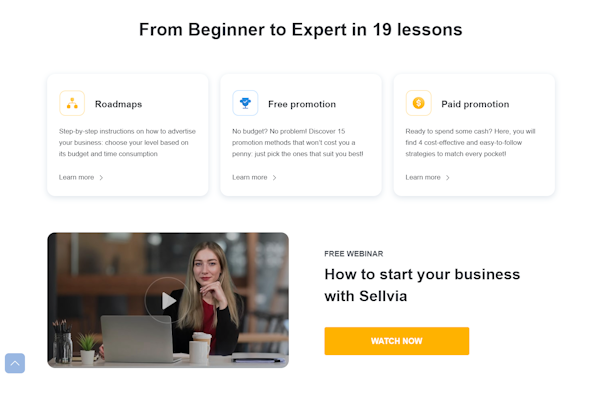
Once you're on Sellvia's platform for half of the ecommerce problem is resolved. Dropshipping's traditional nightmares, such as logistics, shipping, as well as coordination with suppliers, are efficiently organized, automated, and provided, and at a monthly charge. This provides a powerful, almost disorienting clarity: Sellvia is not your business, it's your fulfillment department. You are not opening your own shop when you register. You employ a logistics provider, and you are solely accountable for the marketing department. In this scenario the function of marketing is no longer needed. It's the business. Everything else is a product.
This realization will make the difference between success and failure. Sellvia's automated process effectively eliminates any excuses. Delivery delays cannot be blamed for bad reviews. It is not your fault that there were the order processing. Operational crutches are no more. The challenge of acquiring customers is now a raw and unadorned one. Your online store, based on a shared catalog that is shared with other sellers, sells mainly non-differentiated items. The key to being competitive is not necessarily what you're selling, instead, it's the story and audience you create around it. You are not a retailer firm; you're an established media company. Your primary product isn't a gadget that you pick up from the warehouse. It's the advertising, content and email sequence as well as the community feel that draw people to buy the gadget.
Consequently, the entire financial architecture of your business will shift. In traditional businesses capital is divided between operations, inventory and marketing. In your Sellvia-powered business, nearly all your intellectual capital and risk will be channeled to one line item: Customer Acquisition Cost (CAC). Subscription fees are fixed costs. The product cost is well-known. The only thing you are able to control, and the one which will determine your survival is the amount you spend to get customers to your checkout. You are now a full-time data analyst as well as a media buyer. You're not simply "running an ad on Facebook." You're involved in a continuous, high-stakes test, comparing A/B tested ad creatives, dissecting the data to reduce your CAC, and constantly trying to achieve a positive Return on Ad Spend (ROAS) that has to be enough to be sufficient to pay for the cost of your Sellvia subscription. Cost of goods minus sales is not the same as profits. It's the Lifetime Value of the Customer minus the Platform Fee. Every decision is based on this calculation.
Success is determined by the kind of entrepreneur who concentrates on marketing. The ideal model for success is not the generic "storeowner," but rather a specialist in marketing channels. The ones who are successful in a particular sector are winners, not those that play around. The founder could be able to create organic videos of viral style on TikTok. This can turn Sellvia's speedy shipping into content. It could be someone who has mastered Pinterest SEO for a specific category of home goods, which drives targeted, free traffic. Another person could be adept in building a community for Instagram that is based on a specific lifestyle in which product recommendations seem natural. The uniformity of the back end of the platform makes it difficult for differentiation at the front. It is not the secret supplier that is your moat of competition; it's your audience and how you can connect with them in a cost-effective way.
Sellvia, in the end is a very effective method of prioritizing your business. It allows you to become overwhelmed by the creative and analytical challenges of demand creation. It clarifies with a uncompromising honesty that in the present digital world, the main industry is about distribution. It poses a question which will determine you: Are at your most fundamental level, an expert in marketing or not? Are you ready and willing to put 90 percent of your time and budget not on your product or website, but rather on the art and science of attracting attention and turning it to trust? If the answer is yes, Sellvia provides a powerful, frictionless engine to fulfill this need. If you answer "no", you simply have to pay for a subscription to a fully silent and automated room. The platform hands you the keys to a reliable delivery truck. However, you'll have to create billboards, paint roads, and convince people that they should travel. Have a look at the most popular sellvia for website tips including sellvia dropshipping reviews, sellvia ecommerce, sellvia dashboard, sellvia contact number, sellvia support, sellvia dashboard, sellvia marketing tools, sellvia products, sellvia photos, sellvia stores and more.
